 Bitten by Books
 Dying for the Past—Aren’t We All?
I often live in the past. I think we all do. Our past is who we are—maybe not exactly—but it makes us who we are. Doesn’t it? If we have a great past, we live it today. If our past is not what we wished, we can change it. Either way, our past is like history—it is our roots, like it or not.
As an author, my past drives my stories. The plot. The Characters. Research. The writing. My stories are not just an exercise in drama or adventure, though. It’s more an exorcism of my demons … those from my past. In all my eight novels to date—three of which are or will be published—my stories steal from my real-life experiences, including the people I’ve known. They drive my character’s history, their loves and hates, their strengths and weaknesses, and above all, they drive their character and actions.
Why reinvent the wheel? I’ve known some wonderful people and some pretty nasty pieces of… work. I couldn’t create better characters than those I know. So why try?
Therein lies my secret. I live in my past and the pasts of others—my grandfather before he left us, my mentor every couple weeks, and the stories and reminiscence of friends and colleagues who have spent their lives chasing bad guys around the world. Our pasts make us. It is not only who we were, but it’s who we are. Now. In the future. Always.
My first full novel, The Trail of Trinity, was written while on assignment in Athens, Greece. I was a rookie anti-terrorism agent there and I was learning as I went. I made tons of mistakes. I was a kid by any standard—in my mid to late twenties—trying to learn a big-boy game. So I ran hell-bent into every operation I could, “chasing the jazz” as we often said, and didn’t stop for over three years. In my spare time—the few hours I had—I penned Trinity.
It was dribble—my first effort that will remain in a box hidden away forever. It was about who I was at the time and my past. The characters were vaguely-disguised versions of my partner and colleagues—big mistake. The villain was the amalgamation of three of the worst bad guys I’d ever known. I found that at the ripe age of 27, my past wasn’t deep enough for me to pull off any semblance of real-world. Trinity stunk—it will never see the light of day—and it shouldn’t, at least until I die and someone wants a laugh. I learned a valuable lesson. I had to have more past.
For the next few years, my past continued to grow as did my stories. There was The Whisper Covenant—my first effort after ten years without writing more than a few chapters. It wasn’t bad but it wasn’t good enough. Then there came Double Effect—to this day, one of my best novels and as yet unpublished. Most recently, there has been New Sins for Old Scores and The Killing of Tyler Quinn. New Sins is in my agent’s hands now, trying to find a home. Tyler Quinn is on the edit board ready for a thorough rewrite. Both these works are deeply rooted in major cases I ran when I was a younger government agent and later a private security consultant. Both were stories sparked from my past.
Yet, it was Oliver “Tuck” Tucker and Dying to Know that got me published first. Tuck’s a dead-detective extraordinaire who chases killers and spies and bad guys like I used to (okay, maybe better). He’s rooted in the people and places and adventures of my past. As close to true as I dare get—except for the dead-detective thing. That would be too weird, right?
Dying to Know is the pulp version of a nightmare that plagued me for over twenty years. I was killed chasing a bad guy and came back to help my wife and partner solve the case. The story and subplots were vignettes of real-life cases I’d worked over the years. The characters were glued-together pieces of friends, enemies, and associates.
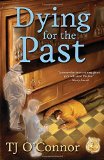
Now, in Tuck’s newest case, Dying for the Past, I had to take my nightmare and roll out the first of two sequels. Despite my initial terror of writing a sequel, I found it easier than I thought. I took my own advice and grounded the story in my past, and perhaps more so, in the past I wish I’d experienced.
In Dying for the Past, Tucker is still an earth-bound dead-detective—the Gumshoe Ghost as my publisher calls him. He’s on the case of a murdered mysterious philanthropist, Stephen Grecco, with ties to the Russian mob and 1939 gangsters. His wife, Professor Angela Tucker, and his former partner, Detective Bear Braddock are helping, too. Together, they must find the killer and be the first to read “the book”—an old gangster’s journal of the roots of espionage, racketeering, and corruption leading to the identity of modern-day powerbrokers and spies. Tuck finds a colorful cast of allies in RuthAnne Marcos, Assistant U.S. Attorney General, a secretive FBI agent, and Vincent Calaprese, spirit of a long-dead 1930′s gangster and his arm-candy vixen, Sassy (two of my favorite new characters). As the case unfolds, so does the list of suspects like retired mobster Poor Nic, a Russian thug making his move into Winchester; Chevy, a tenacious paranormal investigator stalking Angela; and André Cartier, Angel’s uncle and mentor. There’s also the beautiful Bonnie Grecco, the dead philanthropist’s widow, who holds the key to millions of hidden loot and the location of “the book.” As Tuck searches to learn the secrets of “the book,” he begins to unravel his own ancestry of mobsters, adventurers, and wayward spirits. Is being a ghost hereditary? Even while chasing a killer, the biggest challenge Tuck must conquer is how to be back amongst the living but not one of them.
Okay, so I’m not 95 years old and never ran with 40s’ mobsters. I wish I had. You see, I truly love the ‘40s—the music, American history (especially World War II), and gangsters. I love the mood. I love swing music. I love film noir. Above all, I love the intrigue of the era. My grandfather, Oscar, was a WWII vet who served in the Pacific. He told me stories of unwittingly working for military intelligence under McArthur. My mentor, Wally, is one of the last of the Office of Strategic Services (OSS) operatives and a former senior executive with the CIA. He lived that history and recites it to me like it was yesterday. I live for lunch at the Greek Taverna swapping stories and drinking retsina with him.
So, while Dying for the Past isn’t truly my past, I made it mine—starting with the title. Dying for the Past is a play on words. It sets the theme of the story—characters answering for misdeeds of their past and Grecco’s murder hinges on events from 1939 that boiled over to 2015. It’s also where my heart is—I’m dying for that past. I wish I’d lived those years—danced to Goodman and Glenn Miller, chatted with Mic Spillane and Ray Chandler. I didn’t—so I created that past and sent Tuck headfirst into it.
We’d all love to do that now and then, right? To return to our past? Maybe even a past we didn’t have but wished were our memories? My past is a rollercoaster ride of thrills, spills, success, and failures. I’ve had my share of life-adventure that most people only read about in books. Today, I’m lucky enough to write about it—and sometimes write about the past I wish I’d had—the real with the fantasy. It’s the best of both worlds, no?
The truth is, we’re all Dying for the Past. Aren’t you?
About Tj O’Connor

Author Bio:
Tj O’Connor lives in Virginia with his wife and three Labs. Dying for the Past, the first of two sequels to Dying to Know, releases January 8, 2015—available now for pre-orders. Dying to Know is available in bookstores and online everywhere. Tj is an international security consultant specializing in anti-terrorism and investigations.
Connect with Tj
| Website | Facebook | Books by TJ O’Connor | Reviews of Tj’s Books |


I wish I lived in those times. Unfortunately I was born after all of that excitement. If I could have iPhones of this time and the fun and events of that time it would be the best.
What an interesting post! I enjoy learning about an author’s background and the inspiration for his stories. Thanks for sharing.
Sounds truly fascinating. Coming from a law enforcement/EMS background - I’ve always enjoyed those types of stories from the past. And I’ve always been fascinated by the true psychopath and sociopath’s mind as well!!! Definitely will pick up a copy
I treasure the little tidbits my maternal grandmother would drop about her childhood. At the time I did not understand it… Why she and her sister had to hide in the attic. I forget the reason she had put… I just wish I could have had more times listening to those stories.. there is one story I remember that made me laugh that dealt with an outhouse, a michieveous horse, and my mamaw…
But yeah, sometimes my head lives in the past. It is something I cannot help but do at times…
I like historical mysteries, especially set in Victorian times. I also like learning about history from Mysteries at the Museum (on the Travel Channel) and from reading true ghost stories.
It’s always interesting to see how an author’s mind works.
I loved Dying to Know. I actually think I might have won it here at the BIIIG contest right before BBB moved back to Seattle. Now to decide whether to get the paperback on pre-order or wait for Past to be on kindle…
I agree that the 1940s had some awesome music.
Great interview…Dying For the Past sounds really interesting, I think it could be the next book on my list!! I love learning about an author’s background, what makes them tick, and what inspires them. Thanks for sharing.
I guess I miss the recent past more than the really old days (what can I say, I like modern medicine and being able to vote)…